Hotels That Deserve Michelin Keys But Were Snubbed
Some of the world's most celebrated hotels received no Michelin Keys or were placed at surprisingly low tiers. Here are the biggest omissions and why they might have been overlooked.
When Michelin launched its Key system for hotels in April 2024, it instantly became the most consequential rating in the hospitality industry. For 125 years, Michelin stars had defined restaurant excellence. Now, One, Two, and Three Keys would do the same for hotels. The initial rollout covered 15 countries across 7,000+ properties, ultimately awarding 141 Three Keys, 569 Two Keys, and 1,725 One Keys globally.
The selections were mostly applauded. But in luxury travel circles, the conversation quickly turned to a different question: Who got left out?
Some of the world's most celebrated, most awarded, most expensive hotels received no Keys at all -- or were placed at tiers that seem, to many seasoned travelers, inexplicably low. Here are the biggest omissions and the most likely explanations for why they were snubbed.
The Headline Snubs
San Ysidro Ranch -- Santa Barbara, California
San Ysidro Ranch is not just a luxury hotel. It is a legend. JFK and Jackie honeymooned here. It was named the World's Best Romantic Hotel by Travel + Leisure. The 500-acre estate in the Santa Ynez Mountains offers stone cottages tucked among citrus groves, with the kind of old-money California charm that cannot be manufactured.
And yet, while the Michelin Guide lists San Ysidro Ranch in its hotel selection, it has not awarded the property any Keys. This is perhaps the single most discussed omission in the American luxury hotel world. For comparison, Canyon Ranch Tucson -- a wellness resort in the desert -- received Three Keys at $305/night. San Ysidro Ranch, routinely priced above $1,500, was passed over entirely.
The most likely explanation: San Ysidro Ranch has an intentionally rustic quality. The cottages prioritize privacy and seclusion over contemporary design finishes. Michelin evaluates architecture and interior design as one of its five criteria, and the deliberately understated aesthetic may not have aligned with what inspectors look for.
Hotel de Crillon, A Rosewood Hotel -- Paris, France
The Hotel de Crillon occupies one of the twin buildings flanking the Place de la Concorde, designed by architect Ange-Jacques Gabriel in 1758 for Louis XV. It reopened in 2017 after a four-year, 200-million-euro renovation by Rosewood. By virtually every measure -- history, location, design, service, dining (L'Ecrin holds a Michelin star) -- it belongs in the top tier of Parisian hotels.
Michelin awarded it Two Keys. Not Three.
Meanwhile, Paris has seven Three-Key hotels, including Ritz Paris ($2,640/night), Cheval Blanc Paris ($2,516/night), Le Bristol Paris ($2,196/night), Four Seasons George V ($2,332/night), La Reserve Paris ($1,885/night), Maison Villeroy ($1,438/night), and Le Plaza Athenee ($368/night). The Crillon's exclusion from this group is, for many Paris regulars, baffling. Browse the full France hotel page for all French selections.
The Mark Hotel -- New York City
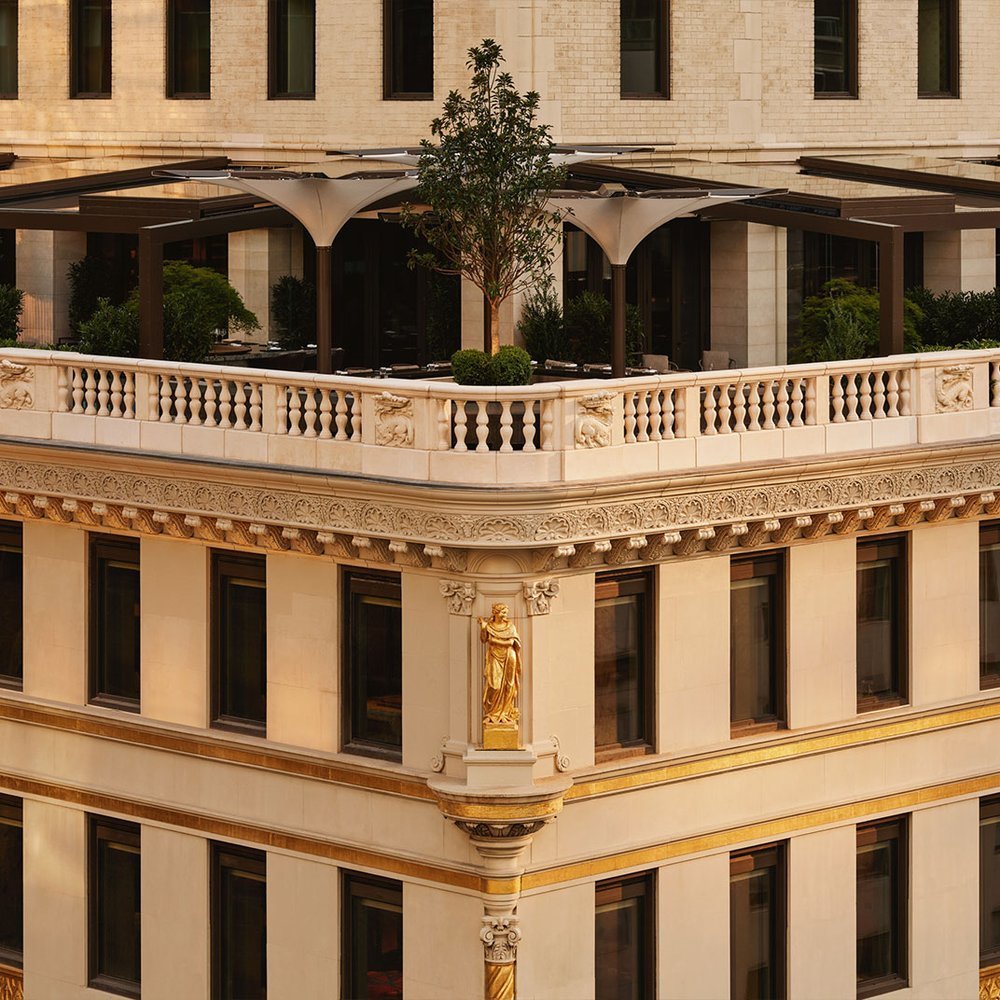
The Mark Hotel on the Upper East Side, designed by Jacques Grange, is frequently cited as one of the best hotels in New York. Jean-Georges Vongerichten runs the restaurant. Mark Zeff redesigned the interiors. It is a fixture on Conde Nast Traveler and Travel + Leisure best-hotel lists.
Michelin gave it One Key. New York's Three-Key hotels are Aman New York ($3,224/night), Crosby Street Hotel ($1,719/night), The Whitby Hotel ($1,490/night), and Casa Cipriani ($1,037/night). The fact that two Firmdale properties earned Three Keys while The Mark received only One has raised eyebrows across the industry.
The Oberoi Udaivilas -- Udaipur, India
Routinely ranked among the top five hotels in the world by readers of Travel + Leisure and Conde Nast Traveler, The Oberoi Udaivilas is a palatial property set on the banks of Lake Pichola. Its architecture draws from the Mewar royal tradition, with domes, courtyards, and reflecting pools that create one of the most photogenic hotels anywhere.
The Michelin Guide does include India in its hotel selection, and Taj Lake Palace in Udaipur received Three Keys at $880/night. But the Oberoi Udaivilas, its chief rival, did not reach the same tier. Many luxury travel experts consider the Oberoi at least the Taj's equal, if not its superior, in terms of service and design.
Taj Mahal Palace -- Mumbai, India
The Taj Mahal Palace in Mumbai is arguably India's most iconic hotel -- a Bombay landmark since 1903 with its famous red dome overlooking the Gateway of India. While the Taj group's Taj Lake Palace and Taj Falaknuma Palace ($453/night) both earned Three Keys, the flagship Mumbai property was placed at a lower tier. For a hotel of this historical significance and consistent quality, the distinction feels like an oversight.
Hotels Completely Outside the Michelin System
Some notable omissions exist not because Michelin snubbed them, but because the Guide has not yet expanded to their countries or regions.
Singita Lodges -- Tanzania and Zimbabwe
Singita operates some of the most celebrated safari lodges in Africa. Properties like Singita Sasakwa in the Serengeti and Singita Pamushana in Zimbabwe consistently top lists of the world's best hotels. Yet Michelin has only recently begun covering African hotels, and its coverage is limited. Compare this to the Three-Key African properties that are included: Londolozi Game Reserve ($3,782/night) and Royal Malewane ($3,271/night) in South Africa, Giraffe Manor ($333/night) in Kenya, and La Mamounia ($789/night) in Morocco. Tanzania and Zimbabwe are not yet fully covered.
Four Seasons Bora Bora -- French Polynesia
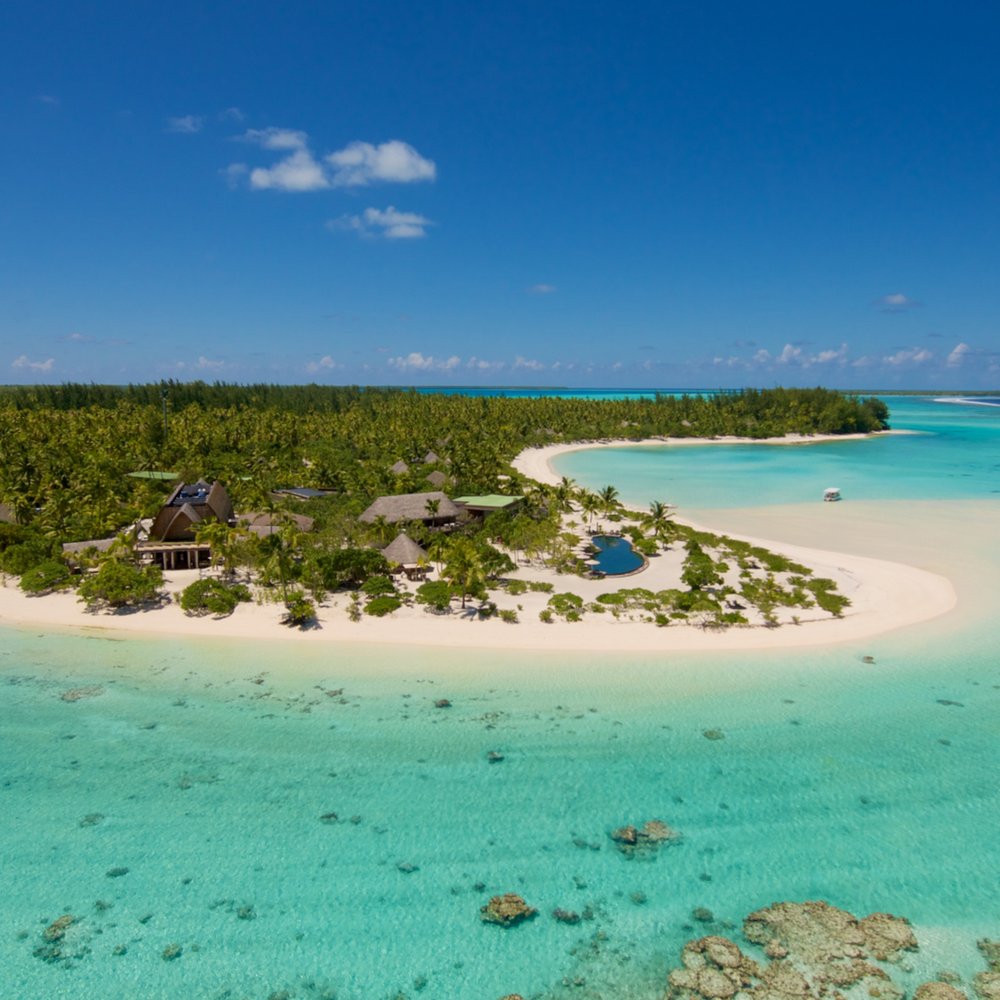
The Four Seasons Resort Bora Bora, with its overwater bungalows and Mount Otemanu views, is one of the most aspirational hotels on the planet. French Polynesia does appear in the Michelin system -- The Brando on Tetiaroa holds Three Keys at $4,975/night. But the Four Seasons Bora Bora, arguably more accessible and more visited, has not received equivalent recognition. This may reflect Michelin's emphasis on uniqueness and "personality" -- The Brando's environmental mission and private-island concept are more distinctive than the (admittedly spectacular) overwater-bungalow model.
The Peninsula Paris
The Peninsula Paris, occupying a restored 1908 building near the Arc de Triomphe, is one of the most expensive and acclaimed hotels in the city. Its rooftop restaurant offers some of the best views in Paris, and the rooms are among the most technologically advanced of any heritage hotel. While The Peninsula London received Three Keys ($1,019/night), the Paris property has not matched its sibling's achievement -- a curious asymmetry given that Peninsula Paris is generally considered the brand's crown jewel.
One&Only Cape Town -- South Africa
One&Only Cape Town, on the V&A Waterfront with Table Mountain as its backdrop, is frequently cited among Africa's best urban hotels. The One&Only brand is represented in the Three-Key list through One&Only Mandarina in Mexico ($1,225/night), but the Cape Town property has not been similarly recognized. South Africa's Three-Key representation is currently limited to safari lodges.
Why Do These Omissions Happen?
Understanding Michelin's methodology helps explain (though not always justify) these gaps.
1. The System is Still Young
Michelin Keys launched in April 2024. The restaurant star system, by contrast, has been refining its coverage since 1926 -- nearly a century of accumulated inspection depth. The hotel program is in its infancy. Many properties have simply not yet been inspected, or have only been visited once. Michelin's own materials note that the selection is expanding each year.
2. Geographic Coverage is Uneven
Michelin initially rolled out Keys across 15 countries. While the 2025 expansion added more destinations, significant gaps remain. Much of Africa, South America, the Middle East, and Central Asia have minimal coverage. A world-class lodge in Tanzania may be invisible to the system simply because there are not enough inspectors on the ground.
3. Michelin Has a Specific Point of View
The five criteria -- architecture and interior design, service quality and consistency, personality and character, value for price, and contribution to local experience -- reflect Michelin's particular philosophy. A hotel can be universally loved and still not align perfectly with these criteria. San Ysidro Ranch's deliberately rustic cottages may score lower on "architecture and interior design" than a sleek contemporary property, even if guests overwhelmingly prefer the rusticity.
4. Hotel Ratings and Restaurant Ratings are Independent
A hotel with a three-Michelin-star restaurant is not guaranteed any Keys. Michelin has been explicit about this. The hotel evaluation and the restaurant evaluation are conducted by separate teams with separate criteria. This explains cases where a property with extraordinary dining (like Hotel de Crillon's L'Ecrin) does not receive the hotel recognition some would expect.
5. Brand Reputation is Irrelevant
Michelin does not award Keys based on how famous a hotel is, how long it has been open, or how many awards it has received from other publications. The inspectors evaluate the current experience. A 120-year-old icon with deferred maintenance may score lower than a five-year-old boutique hotel that gets every detail right today.
What the Current Three-Key List Tells Us About Michelin's Taste
Looking at who did make the Three-Key cut reveals Michelin's preferences:
- Intimate properties over mega-resorts: Most Three-Key hotels have fewer than 100 rooms. Corte della Maesta in Civita di Bagnoregio, Italy has just a handful of rooms at $331/night.
- Strong sense of place: Properties deeply connected to their location -- like Asaba, a 350-year-old ryokan in Izu, Japan ($316/night) or Giraffe Manor in Nairobi ($333/night) -- earn top marks.
- Design boldness: Fogo Island Inn ($3,500/night) and Amangiri ($5,776/night) are architecturally daring in ways that more traditional grand hotels are not.
- Completeness of experience: Hotels where every touchpoint -- from arrival to dining to spa to departure -- feels considered and intentional.
Looking Ahead
The Michelin Key system will inevitably expand. More countries will be covered. More inspectors will be deployed. Properties that were overlooked in 2024 and 2025 may receive recognition in 2026 and beyond.
For now, the absence of a hotel from the Key list does not mean it is unworthy -- it may simply mean the system has not yet caught up. The hotels listed in this article are, by any reasonable measure, world-class. Their time may come.
In the meantime, the existing Three-Key list remains the most rigorous, most independent hotel ranking in the world. Browse the complete collection at Three-Key Hotels, see them ranked by price, or explore which cities have the most Three-Key hotels.
Hotel data and pricing from michelinkeyhotels.com. The Michelin Key system launched in April 2024 and continues to expand. Omissions discussed in this article reflect the state of the program as of February 2026.
Author
Ravi Patel
2026/02/15
Ravi Patel is a seasoned travel writer from India, with expertise in sustainable tourism and eco-friendly resorts. His work has been featured in numerous international publications, advocating for ethical travel practices.


