Can You Trust Michelin Key Hotel Ratings? A Data-Driven Look
Bloomberg raised concerns about Michelin's hotel rating conflicts of interest. We examine the controversy, the business model, and what the data actually shows about 8,425 rated hotels.
When Michelin unveiled its Key system for hotels in 2024, the hospitality world paid attention. The same company that had spent over a century building the most recognized restaurant rating in the world was now grading hotels on a one-to-three Key scale. By 2025, the program had expanded globally to cover more than 8,400 hotels across 40+ countries, with 141 earning the coveted Three-Key distinction.
But with that rapid expansion came questions. A Bloomberg investigation in October 2025 raised concerns about conflicts of interest, and hoteliers have privately questioned whether the system is truly independent. Here is a fair examination of the controversy and what the data actually shows.
How Michelin Makes Money from Hotel Ratings
The core tension is straightforward: Michelin is both the judge and the marketplace.
In 2018, Michelin acquired Tablet Hotels, a curated booking platform featuring roughly 6,000 luxury and boutique hotels globally. Every hotel that receives a Michelin Key is immediately bookable on the Michelin Guide website, where Michelin earns a commission on each reservation. This is a fundamentally different model from restaurant stars, where Michelin has no financial stake in whether you actually dine at a starred restaurant.
Beyond booking commissions, Bloomberg reported that government-run tourism boards pay for Michelin Guide inspectors to visit their cities and regions. At a Paris event in 2025, Michelin acknowledged this publicly for the first time, noting that tourism boards fund inspection visits to certain destinations. This means that a country or city willing to pay for inspections may receive more coverage than one that does not.
Michelin maintains that all reviews are conducted by full-time, anonymous inspectors and that commercial relationships have no influence on ratings. But the perception problem is real.
What Michelin Says Its Inspectors Evaluate
Before examining the controversies further, it is worth understanding the criteria. Michelin says its hotel inspectors evaluate five dimensions: the quality of architecture and interior design, the quality and consistency of service, the overall personality and character of the property, how well the hotel reflects its location and environment, and the value the hotel provides relative to its price point.
That last criterion — value relative to price — is notable because it theoretically allows budget-friendly properties to earn high ratings. And indeed, the data bears this out: Airelles Gordes, La Bastide in Provence holds Three Keys at just $324 per night, while Canyon Ranch Tucson earns the same distinction at $305 per night. Michelin is not simply awarding Keys to the most expensive hotels.
The question, however, is how consistently these criteria are applied and whether the inspection process has the scale to truly evaluate 8,400+ hotels with the rigor that made Michelin restaurant stars so trusted.
The France Question: Bias or Merit?
The most scrutinized data point in the Michelin Key system is France's dominance. Of the 141 Three-Key hotels worldwide, 23 are in France — more than any other country by a wide margin. Here is how the top countries compare:
| Country | Three-Key Hotels |
|---|---|
| France | 23 |
| United States | 15 |
| Italy | 13 |
| United Kingdom | 11 |
| Switzerland | 9 |
| Japan | 7 |
| Thailand | 6 |
| Germany | 6 |
| Spain | 5 |
See the full country breakdown in our city rankings analysis.
Critics argue that France's outsized share reflects a "home bias" — Michelin is a French company, after all. The Michelin Guide was born in France in 1900, and the company's institutional DNA is steeped in French hospitality culture. When your benchmarks were shaped by Parisian palaces, it is not unreasonable to wonder whether those palaces get preferential treatment.
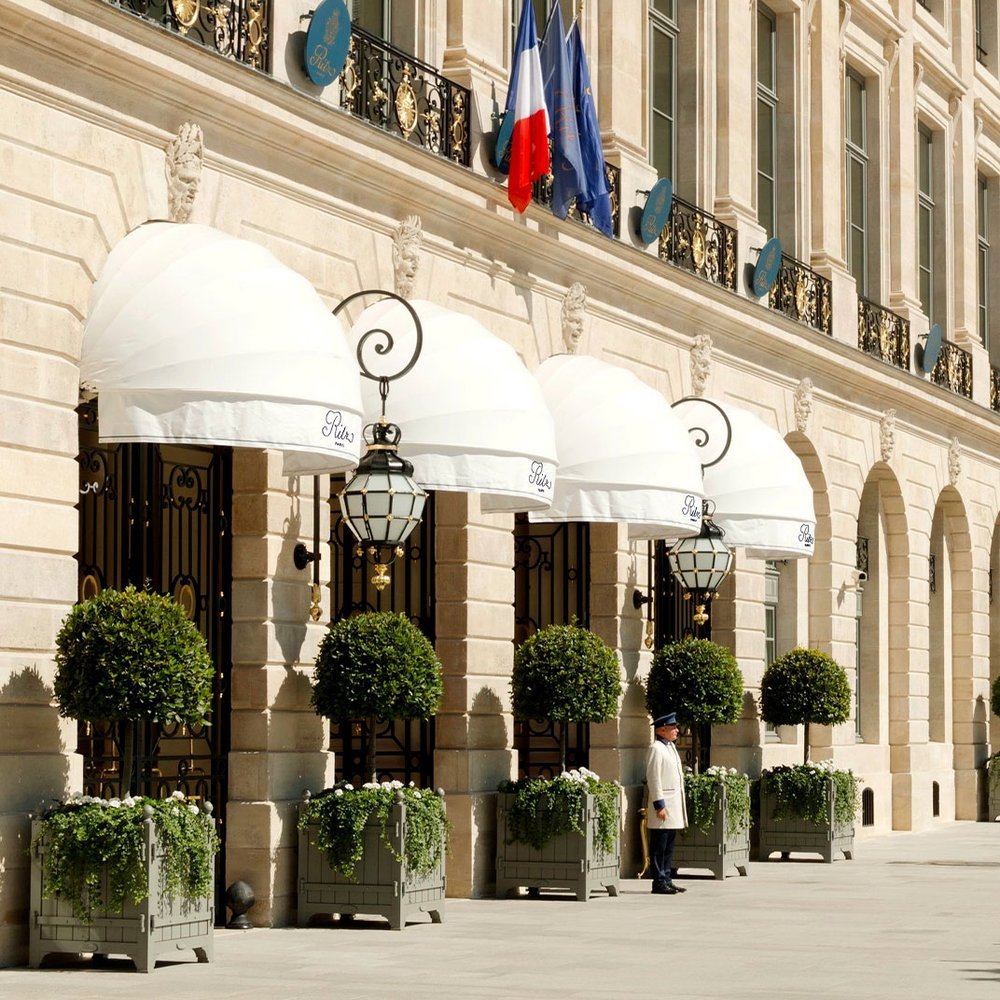
The counterargument is equally compelling. France genuinely has one of the deepest luxury hotel traditions in the world. Paris alone is home to a concentration of palace-category hotels — Ritz Paris, Cheval Blanc Paris, Four Seasons George V, Le Bristol Paris, La Reserve Paris — that have been setting global standards for decades. Beyond Paris, France boasts Three-Key properties in Courchevel, Provence, Champagne, the Riviera, and Bordeaux. These are not obscure selections; many appear on every major "best hotels in the world" list regardless of who compiles it.
It is also worth noting that France's dominance is not unique to Michelin. Forbes Travel Guide, the World's 50 Best Hotels, and Conde Nast Traveler's Gold List all feature heavy French representation. When multiple independent rating systems arrive at similar conclusions, the explanation is more likely to be genuine merit than systematic bias.
The honest answer is probably both. France deserves a large share, but the exact magnitude of that share likely reflects some cultural proximity in how Michelin defines excellence.
What the Data Tells Us About the Rating Distribution
Looking at the full database of 8,425 Michelin-rated hotels reveals a steep pyramid:
| Tier | Hotels | Share |
|---|---|---|
| Selected (no Keys) | 5,990 | 71.1% |
| One Key | 1,725 | 20.5% |
| Two Keys | 569 | 6.8% |
| Three Keys | 141 | 1.7% |
Only 1.7% of rated hotels receive Three Keys. That selectivity mirrors the Michelin star system, where three-star restaurants represent a tiny fraction of all rated establishments. The system is clearly designed to be exclusive at the top.
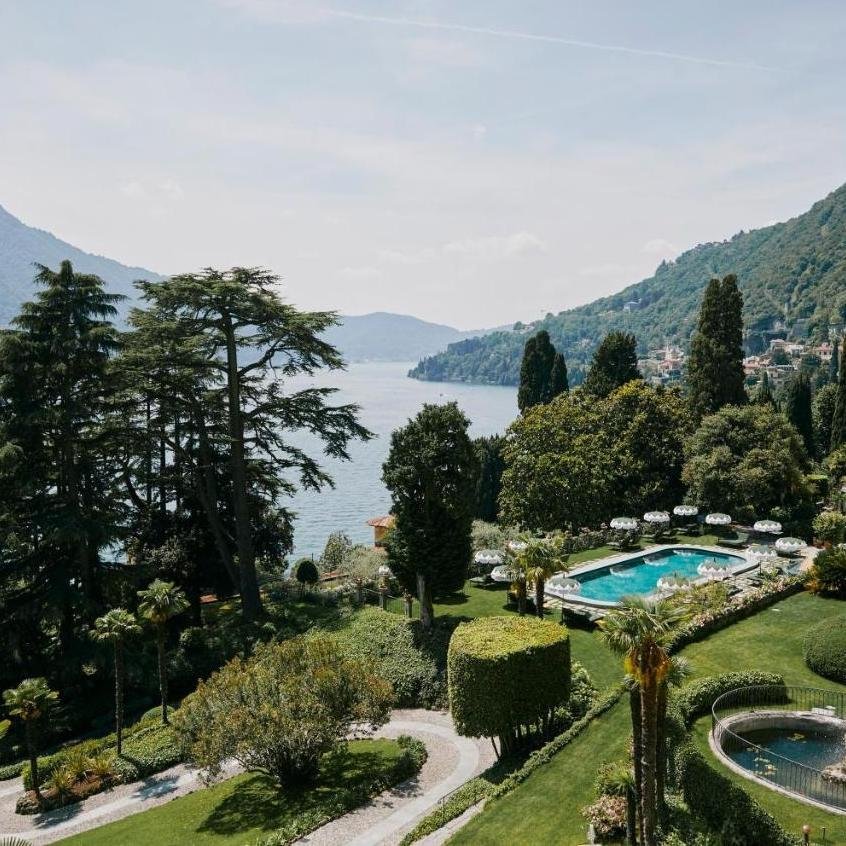
Geographic distribution is genuinely global. Three-Key hotels span 40 countries across six continents, from Giraffe Manor in Nairobi to Awasi Patagonia in Chile, from Taj Lake Palace in India to Clayoquot Wilderness Lodge on Vancouver Island. This is broader coverage than either Forbes Travel Guide or the World's 50 Best Hotels can claim.
The Price Range Challenge
Another point of contention: does the Key system favor expensive hotels? The data suggests a nuanced answer. As our price ranking analysis shows, Three-Key hotels range from $300 per night at Hotel du Castellet in Provence to $6,971 per night at Clayoquot Wilderness Lodge. Twenty percent of Three-Key hotels cost under $500 per night, and several cost less than a standard room at a big-city Hilton.
That said, the median Three-Key hotel costs over $1,000 per night. This is still overwhelmingly a system that rates luxury properties. Budget travelers will not find much practical guidance here, and that is by design.
The wide price range does undermine one criticism: that Michelin Keys are simply a ranking of who spends the most on their property. Corte della Maesta in the Italian hill town of Civita di Bagnoregio ($331/night) and Terra Dominicata in Tarragona, Spain ($302/night) sit alongside Aman New York ($3,224/night) and Cheval Blanc Randheli ($5,816/night) at the Three-Key level. Whatever Michelin's inspectors are measuring, it is not simply price.
The Rapid Expansion Concern
Another legitimate criticism concerns the speed of Michelin's hotel expansion. The Guide went from zero hotel ratings to 8,425 hotels across 40+ countries in roughly two years. Restaurant ratings, by contrast, were built slowly over decades, with inspectors making multiple visits before awarding stars.
Some industry observers question whether Michelin has hired enough qualified hotel inspectors to evaluate this volume meaningfully. A Michelin restaurant inspector typically visits a restaurant at least twice before awarding any recognition. Whether the same rigor applies to hotel inspections at this scale is an open question Michelin has not fully addressed.
The counterpoint is that Michelin leveraged its existing infrastructure — including the Tablet Hotels network and existing inspection teams in countries where it already rated restaurants — to scale faster than building from scratch. The company also hired hotel industry veterans specifically for the Key program.
The Independence Question
The structural conflict of interest is worth taking seriously, but context matters. Every major hotel rating system has potential conflicts:
- Forbes Travel Guide charges hotels for consultancy services to help them achieve higher ratings
- World's 50 Best Hotels relies on a voting panel whose members often have relationships with hotel groups
- AAA Diamond ratings are funded by membership fees from travelers and businesses
- Online review platforms like TripAdvisor earn revenue from hotel advertising
No rating system operates in a vacuum. The question is not whether conflicts exist but whether the output is useful and reasonably accurate. On that front, there is meaningful overlap between Michelin Three-Key hotels and properties recognized by other systems. Passalacqua, Rosewood Hong Kong, and Cheval Blanc Paris appear on virtually every major "best hotels" list in the world.
A Balanced Verdict
The Michelin Key system is neither a pure meritocracy nor a pay-to-play scheme. It is a credible but imperfect rating operated by a company with legitimate financial incentives to be both accurate (to maintain brand credibility) and commercially successful (to sustain the business).
For travelers, the most practical approach is to treat Michelin Keys the way you would Michelin stars: as one data point among several. A Three-Key hotel is very likely to be an exceptional property. A One-Key hotel is very likely to be worth considering. But no single rating system should be the only factor in your decision.
If you are looking for a second opinion, our comparison of Michelin Keys vs. Forbes vs. the World's 50 Best Hotels breaks down the strengths and limitations of each system.
The biggest contribution the Key system has made is simply expanding the conversation about hotel quality beyond the traditional Western European and American luxury corridors. Hotels in Vietnam, Laos, Sri Lanka, and Kenya now sit alongside Parisian palaces in the same rating framework. That matters, even if the framework itself is not perfect.
Data methodology: Hotel counts, pricing, and country distributions are based on the Michelin Key Hotels Database as of February 2026. Pricing reflects a midweek stay in April 2026 for two adults in a standard room. Country totals reflect the current global Michelin Key selection.
Source: Michelin Key Hotels Database
Author
Aria Nakamura
2026/02/15
Aria Nakamura is a travel journalist with Japanese and American roots, specializing in luxury hospitality reviews. She has spent over a decade exploring boutique hotels across Asia and Europe, capturing the nuances of each locale.


