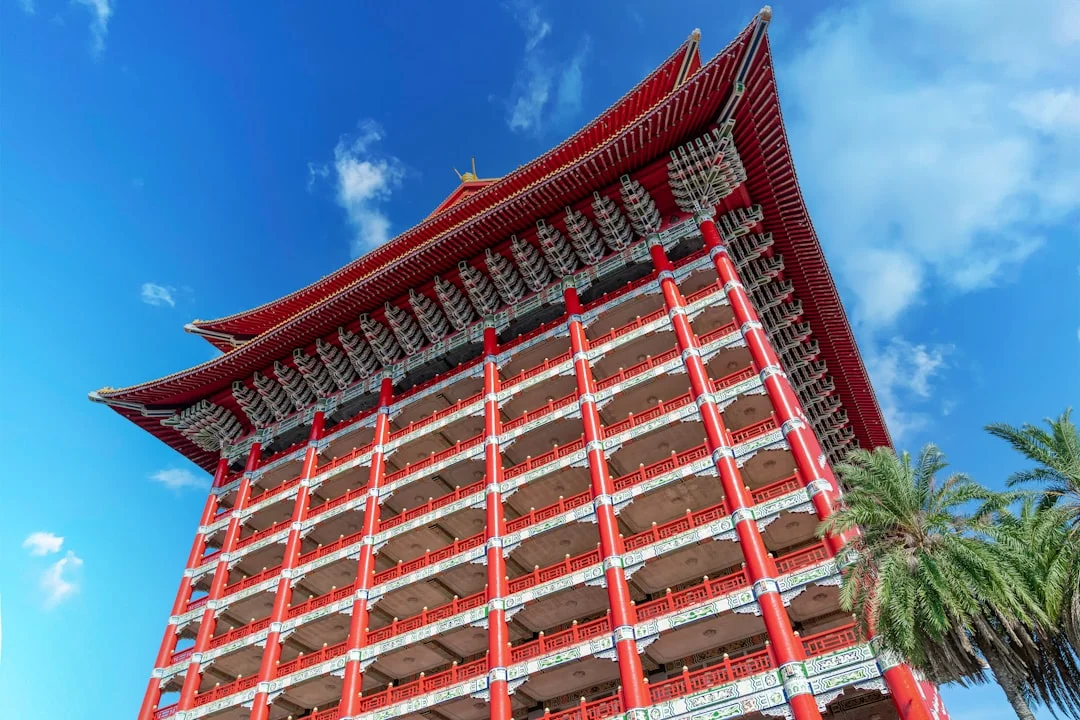
Sustainable Luxury Travel 2026 Trends
Explore our neutral, data-driven analysis of sustainable luxury travel trends for 2026, shaping technology and market dynamics.
The luxury travel landscape in 2026 is being rewritten by a convergence of sustainability mandates, advanced technology, and evolving traveler expectations. Industry trackers report that sustainable practices are transitioning from a value-add to a baseline expectation for high-end travelers, while AI-driven planning and ultra-personalized experiences redefine what “luxury” means in the modern era. In late 2025, leading research from Virtuoso and Booking.com highlighted how sustainability and digital tools are now central to strategic decisions for luxury travelers, signaling a fundamental shift in the market. This trend, described in industry briefings as sustainable luxury travel 2026 trends, is already influencing hotel design, certification programs, and destination management, with implications for operators, developers, and investors seeking to align with responsible luxury while maintaining premium margins. (static.virtuoso.com)
Beyond the headlines, a second wave of data from independent advisors and consultancies reinforces a convergent narrative: travelers want experiences that are meaningful, ensuring that luxury remains synonymous with quality and responsibility. The 2026 Travel Trends Study from Simon-Kucher, released in November 2025, emphasizes the interplay between digital discovery, wellness, and sustainable choices, noting that AI-driven personalization and social-media–driven inspiration are redefining how journeys are conceived and purchased. The study also underscores that sustainability remains aspirational for many travelers, but the gap between aspiration and willingness to pay a premium persists, a nuance that operators will need to manage through transparent value and credible third-party verification. (simon-kucher.com)
Booking.com’s 2026 Travel Predictions, published in late 2025, adds another crucial dimension: the era of individuality will drive demand for hyper-personalized and technologically augmented trips, including immersive, story-driven itineraries and even robotic-assisted hospitality experiences. The “Era of YOU” framework highlights evolving traveler motivations—from romantasy-themed getaways to home-automation–enhanced stays—and shows a substantial portion of travelers receptive to AI-guided recommendations that align with personal preferences and sustainable practices. Taken together, these reports sketch a market where sustainable luxury travel 2026 trends are not only about green credentials but also about leveraging technology to deliver responsible, highly curated experiences at scale. (news.booking.com)
Opening paragraphs recap: the news is that sustainability and tech are now the backbone of high-end travel planning, and the near-term impact is visible in certifications, hotel design choices, and consumer expectations. As travel brands respond, the market is watching for credible certification frameworks, measurable carbon reductions, and verifiable social impact to differentiate genuine sustainability from greenwashing. The convergence of these signals—rising demand for sustainable luxury, AI-enabled personalization, and demonstrated progress toward net-zero facilities—promises to reshape pricing, partnerships, and risk management across the sector. (static.virtuoso.com)
What Happened
Virtuoso Luxe Report 2026: five trends redefine upscale travel
The 2026 Virtuoso Luxe Report, released October 6, 2025, identifies five core trends shaping luxury travel for the year ahead. The report emphasizes that luxury travelers are pressuring suppliers to deliver meaning, privacy, and responsible experiences rather than merely expanding consumption. The five trends include: crowd control to avoid overtourism, “Main Character Synergy” driven by entertainment and cultural immersion, a shift from FOMO to slow exploration, the expansion of ultraluxe with fully inclusive, seamless service, and a growing focus on health and wellness as a core luxury value. The report also notes that sustainability is increasingly embedded in planning, with nearly half of Virtuoso advisors reporting that clients are adjusting plans due to climate change and seeking shoulder-season travel, plus insurance protection against climate-related disruptions. These findings underscore that sustainable travel is now a top criterion for advanced luxury planners, not an optional add-on. (static.virtuoso.com)
Key findings from Virtuoso’s global survey include the following:
- Climate-conscious planning is widespread: 45% of advisors report clients adjusting plans due to climate change; 76% favor shoulder-season or off-peak travel; 75% prioritize destinations with moderate weather; 43% mention insurance for climate-related disruptions. These data points illuminate both behavioral shifts and risk management priorities among high-spend travelers. (static.virtuoso.com)
- Sustainability as a destination characteristic: The Luxe Report signals that sustainable travel considerations are shaping destination selection and itinerary design, reinforcing the importance of credible certifications and transparent practices. (static.virtuoso.com)
- Destination and experience signals: The report lists rising destinations and experiences that align with responsible travel, such as nature-based adventures that minimize crowding and maximize cultural integrity. (static.virtuoso.com)
Booking.com Travel Predictions 2026: the Era of YOU and the rise of Destined-ations
Booking.com’s 2026 Travel Predictions, announced late 2025, map a future where individuality and technology co-create travel experiences, reinforcing sustainability as a baseline expectation in luxury contexts. The press release for the era of YOU reports that the research spans more than 29,000 travelers across 33 countries, with ten defining trends for 2026. Among the notable trends: immersive, personalized, and story-driven travel; interest in fantasy-inspired experiences augmented by AI; and a broad openness to new forms of hospitality, including humanoid-home concepts and robotics-enabled services that can improve efficiency and sustainability at the property level. In the “Humanoid Homes” concept, for example, 77% of travelers surveyed express openness to robot-assisted stays, with 49% saying cleaning bots would influence their booking decisions, 39% excited about robotic chefs, and 25% wanting robots to manage sustainability behind the scenes. These numbers illustrate a tangible technology-inflected path for sustainable luxury. (news.booking.com)
Other Booking.com findings highlight ten trends and a set of “Destined-ations”—destinations and experiences curated to align with travelers’ personal narratives and sustainability expectations. The study notes 71% of global travelers potentially interested in romantasy-inspired destinations, with AI-assisted recommendations shaping itineraries that emphasize sustainability, authenticity, and local engagement. The company also provides a data-rich backdrop for the next steps in luxury travel, including the expansion of themed experiences that fuse cultural immersion with high-end service while maintaining environmental and social responsibilities. The data set spans a large, diverse audience (29,733 respondents in 33 countries) and is supported by detailed infographics that show how respondents’ preferences are evolving, including the balance between convenience, novelty, and sustainable outcomes. (news.booking.com)
Simon-Kucher Travel Trends Study 2026: digital transformation meets sustainability
Simon-Kucher’s November 24, 2025 release positions Gen Z and AI as primary catalysts for a more connected, personalized, and purpose-driven travel economy. The firm’s study surveys more than 10,000 travelers across 10 markets, highlighting that younger travelers disproportionately drive growth and demand that travel platforms and providers leverage AI to spark inspiration and streamline planning. The study’s conclusions emphasize the convergence of wellness and sustainability and note that while the desire for sustainable travel exists, travelers—particularly high-income segments—are not universally willing to pay a premium for it yet. The takeaways support the notion that sustainable luxury travel 2026 trends are oriented toward accessible, tech-enabled, verified sustainability rather than purely price-driven differentiation. “AI is enabling hyper-personalization, wellness is shifting from luxury to lifestyle, and sustainability is now an expectation,” the study summarized. (simon-kucher.com)
- The study’s key data points include: nearly 60% of Gen Z and 57% of Millennials took two or more holidays in 2025; AI tools are used by over 60% of younger travelers for inspiration and planning; holiday budgets are rising globally, with Asia and the Middle East leading growth. The researchers also note that wellness remains aspirational, with four in ten travelers considering a wellness-related holiday for 2026, and half reporting they've already chosen a sustainable trip at least once. These insights collectively underline the technology-enabled, sustainability-forward trajectory of luxury travel. (simon-kucher.com)
Net-zero and green certification momentum among leading hotel groups
Industry attention to carbon neutrality and third-party certification is intensifying as operators translate ambition into measurable action. In 2025, Radisson Hotel Group announced the rollout of Verified Net Zero hotels with two initial properties achieving Verified Net Zero status in Oslo and Manchester, verified by TÜV Rheinland, marking a major milestone for standardized, third-party validation of net-zero claims in luxury and upscale segments. The properties completed transitions in May 2025, with ongoing plans to accelerate the pipeline to 2030 toward 100 verified net-zero hotels. This concrete example demonstrates how sustainability credibly translates into brand differentiation and hotel-level planning. (radissonhotels.com)
IHG’s voco Zeal Exeter Science Park—a branded net-zero hotel completed and opened in March 2025—offers another data point illustrating how major operators are embedding net-zero design and operations into new openings. The project features renewable energy, low-energy design, and embodied carbon reductions, with plans to offset remaining emissions where necessary. This example illustrates a practical path for high-end brands seeking to align with net-zero targets while preserving guest comfort and the luxury experience. (ihgplc.com)
Industry observers also point to policy and standards development that will shape how sustainable luxury travel 2026 trends play out in the next 12–24 months. For example, a Travel Weekly special report outlines Radisson’s objective to refurbish or open a pipeline of net-zero hotels by 2030, with ongoing expansion through 2026. This narrative signals how accelerated net-zero adoption could become a defining factor in brand portfolios and financing strategies, as lenders and investors increasingly favor operators with credible decarbonization roadmaps. (travelweekly.co.uk)
Green certification programs such as Travelife and Green Key continue to gain traction as credible signals of sustainable operations. Travelife’s certification process, timelines, and criteria are widely cited by hotels pursuing Gold status, while Green Key certification criteria have been revised and expanded in 2025–2026, with adoption expected to accelerate in the hotel sector worldwide. In a market where credibility matters, third-party seals offer a defensible way to demonstrate progress toward ambitious sustainability goals without relying solely on self-disclosed metrics. (travelifesupport.com)
Why It Matters
Sustainability is no longer a niche preference; it’s a market baseline

Photo by Tower Paddle Boards on Unsplash
The convergence of trends from Virtuoso, Booking.com, and Simon-Kucher signals a profound shift: sustainability is becoming an expectation, not a luxury add-on, for high-end travel. The Virtuoso Luxe Report emphasizes that the top luxury travelers increasingly seek destinations that avoid overtourism and emphasize cultural preservation, wildlife conservation, and responsible engagement with local communities. In this frame, green certifications and verified environmental performance credentials become essential tools for hotels and destinations aiming to maintain premium demand and price integrity. The data show a direct link between sustainable planning and premium travel choices, including insurance coverage against climate disruptions and a willingness to adjust travel timing to minimize environmental impact. (static.virtuoso.com)
Booking.com’s 2026 Travel Predictions reinforce the idea that luxury travel is moving toward personalization, ethical consumption, and intelligent technology-enabled decision-making. The “Era of YOU” frames not only what travelers want (tailored experiences, meaningful engagements) but also how they choose accommodations and activities—favoring suppliers that can demonstrate authentic sustainable benefits and transparent reporting. The analysis points to a future where travelers assess sustainability credentials alongside design, convenience, and service quality, creating a multi-attribute decision space that rewards verifiable commitments. (news.booking.com)
Simon-Kucher’s findings further underscore that the sustainability narrative is increasingly tied to digital behavior and wellness as part of a broader luxury experience. The study’s emphasis on youth-driven demand for tech-enabled personalization, combined with sustainable expectations, suggests that luxury operators who optimize digital channels, AI-enabled planning, and credible sustainability claims will win share. The study’s caution that willingness to pay a premium for sustainability is not universal—especially among certain segments—highlights the need for transparent ROI models, clear value propositions, and credible third-party verification. (simon-kucher.com)
Technology as a force multiplier for sustainable luxury
Technology emerges as a critical enabler for sustainable luxury travel 2026 trends. Booking.com’s predictions reveal a future where AI-assisted planning, personalized experiences, and even robotic hospitality components can deliver efficiency gains, reduce waste, and improve guest satisfaction when deployed thoughtfully and ethically. AI-driven suggestions enable guests to design journeys that minimize unnecessary travel and optimize energy use, while humanoid-home concepts showcase how smart systems can reduce resource consumption without sacrificing comfort. The data indicate broad openness to AI in travel planning and hospitality, particularly among younger cohorts, which implies a strategic imperative for luxury operators to invest in AI capabilities and secure the trust of guests through transparent governance and data privacy practices. (news.booking.com)
Certification and credibility as a strategic moat
With the rise of carbon-neutral hotel openings and verified net-zero properties, the market is moving toward credible, third-party validation of sustainability programs. Radisson’s and IHG’s public moves toward net-zero operations—each backed by independent verification and measurable targets—provide a blueprint for how luxury hotel groups can align with climate objectives while delivering a premium guest experience. The sector’s increasing reliance on recognized certification frameworks like Travelife and Green Key will be a defining feature of competitive differentiation in 2026 and beyond. For investors and lenders, third-party verification reduces risk around greenwashing and accelerates capital allocation to sustainable premium assets. (radissonhotels.com)
Impacts on the hospitality value chain
- Hotels and brands: The push toward net-zero and verified sustainability will influence capital planning, renovations, and new-build design. The Radisson and IHG examples show how net-zero targets are being integrated into real properties with measurable energy efficiency and embodied carbon reductions, a model many luxury groups are following or adapting. (radissonhotels.com)
- Destinations and destinations marketing: The Virtuoso emphasis on avoiding overtourism and focusing on nature-positive experiences has implications for destination management organizations, airport and cruise-related operators, and local suppliers who must demonstrate sustainable practices to access premium traveler segments. (static.virtuoso.com)
- Consumer assurances: Third-party certifications help travelers differentiate between genuine commitments and greenwashing, supporting premium pricing and loyalty in the luxury segment. Travelife and Green Key certifications are prominent tools in this space, with continued evolution to raise the bar on environmental management, social responsibility, and governance. (travelifesupport.com)
What’s Next
Short term (2026–2027): acceleration of verified net-zero hotels and credible certifications
- The Radisson net-zero hotel pipeline (100 properties by 2030) signals a rapid expansion of verified net-zero facilities across Europe and other regions. The company has publicly stated its intent to accelerate the program in 2026, with ongoing openings and refurbishments that will expand the net-zero footprint. This momentum will likely press other luxury brands to articulate similar roadmaps and leverage independent verification to support marketing claims. (travelweekly.co.uk)
- IHG’s net-zero hotel program demonstrates how major brands will scale sustainable design and operations across a broad brand portfolio, including the adoption of renewable energy and low-embodied carbon construction methods in new openings. Expect more branded net-zero hotel announcements in the coming months as developers and operators seek to balance premium guest experiences with climate commitments. (ihgplc.com)
- Certification programs such as Travelife and Green Key are likely to tighten criteria further and harmonize reporting standards to reduce ambiguity for travelers. Hotels pursuing Gold or Platinum-level statuses will need to demonstrate robust energy, water, waste, and social responsibility performance, creating a credible baseline for sustainable luxury offerings. (travelifesupport.com)
Medium term (2026–2028): technology-enabled sustainability at scale
- AI-driven planning and personalized experiences will become more pervasive in the luxury segment, enabling operators to deliver sustainable journeys with lower risk of over-tourism and higher guest satisfaction. The Booking.com data on AI-assisted inspiration and the Simon-Kucher findings on digital transformation reinforce the need for hospitality ecosystems to invest in AI, data governance, and human-centric design that preserves privacy and enhances transparency. (news.booking.com)
- The proliferation of “destinations as experiences” will require more sophisticated destination management, with a focus on conservation, community benefits, and transparent reporting of impact. Virtuoso’s emphasis on avoiding crowds and supporting local communities will push destinations to partner with hotels and tour operators that can demonstrate credible sustainability outcomes. (static.virtuoso.com)
Long term (2028 onwards): a new premium standard for sustainable luxury
- If the current trajectory holds, sustainable luxury travel 2026 trends will evolve into a new standard of premium hospitality where carbon accounting, life-cycle assessments, and regenerative travel concepts become routine. Industry analysts point to regenerative travel as the next frontier beyond sustainable tourism, suggesting that luxury brands that adopt restorative models—beyond simply reducing harm—could set the next level of premium differentiation. Early signals from industry stakeholders and trade press point to a future where guests expect to see tangible, verifiable contributions to biodiversity, local empowerment, and climate resilience tied to their luxury experiences. (en.wikipedia.org)
Closing
As 2026 unfolds, the hospitality sector finds itself navigating a delicate balance: delivering the exquisite, highly personalized experiences that define luxury while meeting rigorous sustainability expectations and investor-grade governance. The converging signals from Virtuoso, Booking.com, and Simon-Kucher point to a future where sustainable luxury travel 2026 trends are not merely aspirational; they are actionable, measurable, and market-shaping. Across hotel portfolios, certification programs, and destination platforms, leaders are responding with net-zero roadmaps, third-party verification, and AI-enabled tools designed to improve efficiency, transparency, and guest value. The coming years will reveal which brands can translate these trends into durable competitive advantage while maintaining the elevated standards that define luxury travel.

Photo by Artiom Vallat on Unsplash
For readers and travelers seeking the latest developments, the best approach is to monitor official brand announcements, independent trend reports, and recognized certification bodies. Keeping an eye on credible sources and the regulators that supervise environmental standards will help ensure that what is promised in marketing materials aligns with what travelers experience on the ground. In the end, sustainable luxury travel 2026 trends will be judged not just by what is claimed, but by what is delivered in the guest experience: lasting memories built on responsible, transparent, and genuinely premium hospitality. And as the market adapts, travelers can expect more opportunities to enjoy high-end escapes that honor both people and planet.
Author
Ravi Patel
2026/03/27
Ravi Patel is a seasoned travel writer from India, with expertise in sustainable tourism and eco-friendly resorts. His work has been featured in numerous international publications, advocating for ethical travel practices.