APAC Luxury Hospitality Outlook 2026-2027: Openings & Trends
Neutral, data-driven update on APAC luxury hospitality outlook 2026-2027, highlighting technology trends, openings, and market shifts.
The Michelin Key Hotels newsroom is publishing a data-driven briefing on the APAC luxury hospitality outlook 2026-2027, focusing on technology-driven guest experiences, openings, and market dynamics across Asia-Pacific. The report frames a region where demand is rebounding and luxury travelers are seeking differentiated experiences that blend design, dining, and digital enablement. It emphasizes that the coming year will not be only about new doors but about how new properties, brands, and partnerships orchestrate a more immersive, data-informed guest journey. The analysis draws on JLL’s Asia-Pacific hotel investment forecast for 2026, which points to robust but selective capital flows, and CBRE’s market outlook, which highlights event-driven tourism as a core growth lever for premium properties. In short, the APAC luxury hospitality outlook 2026-2027 signals a period of accelerated, tech-enabled brand storytelling that will test new operating models and capital strategies across gateway cities and resort destinations alike. (michelinkeyhotels.com)
In late 2025 and early 2026, the luxury pipeline in Asia-Pacific began to coalesce around a handful of scaffolds: a wave of openings led by global and regional brands, integrated resort ecosystems that blend hospitality with gastronomy and wellness, and a technology-forward mindset aimed at maximizing yield during peaks in leisure and MICE travel. Capella Taipei’s market entry in 2025 set a precedent for design-forward, destination-specific luxury in East Asia, followed by Capella Macau’s deployment within Galaxy Macau in August 2025. These milestones underscore a broader trend toward capitalizing on premium experiences, with 2026 planned openings and brand activations across the region. Ennismore’s 2026 slate—Delano, Morgans Originals, Hyde—illustrates how the luxury pipeline is expanding through multi-brand ecosystems that emphasize social programming, signature dining concepts, and asset-light growth in strategic markets. (michelinkeyhotels.com)
The data also reveal a striking scale: Asia Pacific is projected to account for the largest regional tally of luxury hotel openings in 2026, with the region’s pipeline estimated in the hundreds of thousands of rooms, underscoring how capital is chasing premium experiences in gateway cities and premium leisure destinations. A 2026 global snapshot from MICHELIN Key Hotels shows Asia Pacific leading regional openings, supported by a pipeline that includes Shanghai and Beijing among the top contributing markets, and it emphasizes that technology, branding, and design will be the levers for sustainable premium performance. The same analysis notes that investing in experiential dining, brand storytelling, and digital guest journeys will be central to delivering value in a competitive market. (michelinkeyhotels.com)
Section 1: What Happened
A bold 2026 openings slate from global luxury groups
The APAC luxury hospitality outlook 2026-2027 is anchored by a bold slate of openings and brand activations in Asia-Pacific, with Ennismore publicly mapping a 2026 calendar that features flagship projects and a dense network of dining concepts designed to amplify brand storytelling. Notable entries include Delano London and the anticipated Delano Miami Beach in late 2026, illustrating a cross-continental emphasis on high-impact flagships that anchor regional growth while enabling brand storytelling across markets. In the Asia-Pacific portion of the pipeline, look for mid-to-late-2026 openings across formats like Morgans Originals and HYDE in markets such as Perth and Bali, where developers are pairing resort-scale experiences with curated culinary programs led by international partners. This multi-brand approach reflects a broader industry shift toward premium experiences that fuse lodging with social ecosystems, a pattern highlighted by MICHELIN Key Hotels’ regional analysis. (Source: MICHELIN Key Hotels summary of Ennismore’s 2026 openings slate) (michelinkeyhotels.com)
The year 2026 will also capture renewed investor attention in the region, with JLL forecasting Asia-Pacific hotel investment volumes around USD 13.3 billion in 2026, reflecting a rebound trajectory supported by stable macro fundamentals and strong demand drivers in markets like Japan, Singapore, and Australia. Vietnam is increasingly viewed as a late-stage opportunity as the market matures, suggesting a more nuanced and geographically selective capital allocation strategy in 2026 and beyond. The emphasis is clear: investors are seeking durable earnings streams from premium assets with strong brand affiliations and sophisticated operating models that can withstand cyclicality. This capital backdrop matters because it informs how open-door strategies, capital expenditure plans, and technology investments align with long-run cash flows. (michelinkeyhotels.com)
Asia-Pacific’s total regional openings for 2026 are also mapped in a broader global context, with CoStar-derived projections showing Asia Pacific as the leader in 2026 room openings, followed by Europe and the Americas. The regional data underscore a diversified, cross-market expansion rather than a single growth hotspot, a pattern that signals to developers and operators the need to balance flagship city centers with resort and destination properties to capture a broad spectrum of demand. For 2026, the regional mix includes major openings in Shanghai and Beijing, reinforcing the role of China’s high-value markets in shaping the region’s luxury calendar even as expansion accelerates in other APAC hubs. (michelinkeyhotels.com)
Asia-Pacific investment momentum and top markets
Beyond openings, the APAC investment story is important. JLL’s late-2025 briefing framed 2026 as a year when tourism demand would recover to pre-pandemic levels while event-driven travel remains a key growth driver. The top destinations—Japan, Singapore, and Australia—will continue to attract significant capital, with Vietnam emerging as a newer, high-potential market as it matures. The APAC luxury outlook thus hinges on a combination of durable demand, brand-led premiumization, and capital discipline aimed at projects with clear path to premium returns. (Cited from MICHELIN Key Hotels’ Asia-Pacific investment momentum section and JLL briefing) (michelinkeyhotels.com)
The 2026 narrative is reinforced by LE’s early-2026 pipeline data for the Asia Pacific region, which shows a record-high project count and a high concentration of luxury developments. In particular, LE reports 2,387 projects with 442,973 rooms in the APEC pipeline at the end of Q1 2026, with luxury projects reaching 404 properties and 75,803 rooms—signaling that the premium tier will remain the primary engine of the region’s hotel construction cycle. India leads the region in project counts, followed by Vietnam, Japan, Indonesia, and Thailand, painting a picture of a broad, multi-market expansion rather than a narrow focus on a handful of gateway cities. The data also show a sizable portion of projects in the planning and early development stages, underscoring a pipeline that will extend well into 2027. (lodgingeconometrics.com)
Notable milestone openings shaping the year
Capella Taipei’s 2025 entry—debutting in Taiwan as a first true luxury hotel opening in a decade—illustrates how design-forward, destination-specific luxury is resonating in East Asia. Capella Taipei’s collaboration with Mori Building Group and designer André Fu Studio created a “modern mansion” concept that blends domestic warmth with contemporary glamour, signaling how Asia-Pacific markets are embracing elevated, experience-led luxury. The Taipei property opened on April 1, 2025, a milestone that has influenced subsequent regional openings and brand storytelling around the luxury segment. Capella Macau’s August 2025 debut within Galaxy Macau further demonstrates how premium brands leverage integrated resort ecosystems to capture multi-generational demand, especially in high-traffic leisure destinations where gaming and non-gaming offerings intersect with wellness, gastronomy, and exclusive services. Together, these openings reinforce a pattern where luxury branding, resort-scale formats, and deep food-and-beverage programming become core to achieving premium ADRs and guest loyalty. (michelinkeyhotels.com)
Section 2: Why It Matters
Economic and capital-market implications for luxury travel

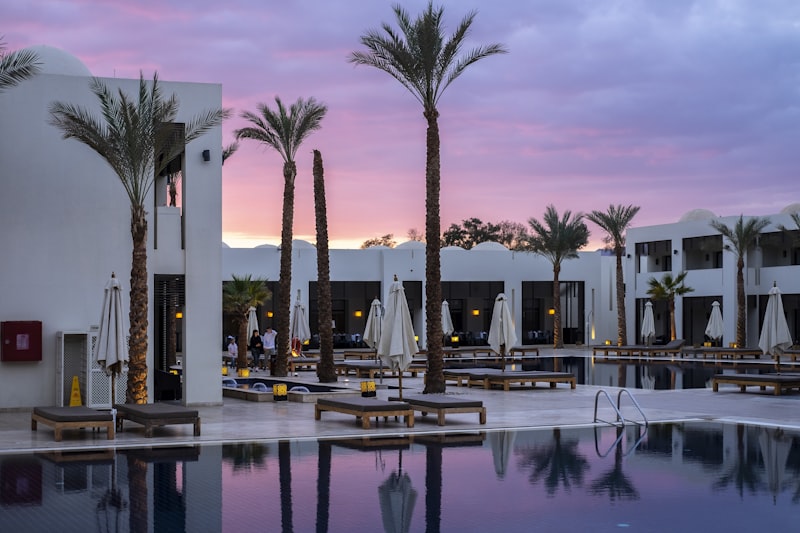
Photo by Katarzyna Urbanek on Unsplash
The APAC luxury outlook 2026-2027 carries clear implications for capital allocation, asset valuation, and risk management. The combination of a robust pipeline and selective capital deployment suggests that investors will favor high-quality assets with strong management, brand affiliation, and scalable operating models. JLL’s forecast of USD 13.3 billion in 2026 APAC hotel investment volumes points to a market where liquidity remains concentrated in core markets, even as opportunities emerge in newer hubs like Vietnam. This dynamic will influence how developers structure partnerships, how lenders assess project viability, and how brands approach loyalty and direct-to-consumer strategies to sustain premium performance across markets. The broader takeaway is that capital will seek durable earnings rather than sheer scale, favoring properties that can deliver consistent guest experiences, high occupancy during peak periods, and resilient ADRs through both ups and downs of the travel cycle. (michelinkeyhotels.com)
Cost-conscious operators and asset-light developers will also lean into technology as a key differentiator. The 2026 luxury openings narrative emphasizes digital check-in, in-room personalization powered by data analytics, and real-time pricing optimization as essential enablers of efficiency and revenue growth. This technology-forward playbook aligns with the market’s expectations for seamless guest journeys that preserve privacy and human touch, a balance increasingly viewed as a core capability in modern luxury hospitality. The MICHELIN Key Hotels analysis frames technology as not a luxury add-on but a central driver of guest satisfaction and margin resilience in a region where staffing pressures, ESG considerations, and evolving guest preferences demand smarter operations. (michelinkeyhotels.com)
Destination-level impacts and brand strategy
Destinations across APAC stand to experience economic boosts from the 2026 openings wave, but the benefits are not uniform. The pipeline’s concentration in gateway cities and mature leisure markets means that cities like Tokyo, Singapore, Sydney, and Bangkok are likely to see stronger hospitality demand, enhanced by events and conventions, while smaller or developing markets may leverage premium brands to accelerate tourism diversification. The technology narrative—ranging from IoT-enabled rooms to cloud-based property management systems and predictive maintenance—offers operators a path to scale personalized service while controlling costs, especially in markets where labor costs and regulatory expectations are evolving. A broader industry perspective emphasizes that successful properties will blend heritage, design-forward aesthetics, and culturally resonant experiences with data-driven guest engagement. This combination should bolster brand loyalty and enable pricing power during peak travel windows. (michelinkeyhotels.com)
The global perspective also matters. MICHELIN Key Hotels’ regional analysis highlights Asia-Pacific as a central engine for luxury growth, with Shanghai and Beijing among the largest contributors to the 2026 pipeline. This regional momentum interacts with global brands’ expansion strategies and with independent luxury networks seeking to localize experiences. The outcome is a more complex competitive landscape where operators must calibrate brand positioning, culinary partnerships, and experiential programming to outperform in markets with strong demand and limited supply. The evidence suggests a future in which the APAC luxury hospitality outlook 2026-2027 will be defined by the depth of brand ecosystems, the sophistication of revenue-management practices, and the ability to deliver ultra-high-value experiences at scale. (michelinkeyhotels.com)
Talent, capability, and the guest-journey imperative
Talent and capability are central to translating a robust openings calendar into sustained performance. Industry observers emphasize the importance of recruiting and developing teams capable of executing premium service at scale, particularly in markets where guest expectations are shaped by iconic brands and high design standards. The integration of digital guest journeys—ranging from mobile-first check-in to app-based concierge services and in-room personalization—will require both leadership and frontline teams who can operate in a tech-enabled luxury environment without losing the human touch that defines hospitality at the top tier. The market signals also point to a growing need for cross-functional partners—technology, operations, and marketing—working in concert to deliver a differentiated, cohesive guest experience that can command premium pricing and loyalty. (michelinkeyhotels.com)
Quotes from leading real estate and hospitality researchers corroborate this trend. A CBRE briefing emphasizes event-driven tourism as a core growth driver for Asia-Pacific markets, with hotel ADR normalization and real-time pricing as essential tools to capitalize on peak demand. The practical implication for operators is to invest in scalable tech platforms that support occupancy optimization, guest personalization, and cost efficiency while maintaining a high standard of service. This is not merely about installing new gadgets; it is about embedding data-enabled decision-making into every facet of hotel operations, from housekeeping to F&B to front desk and guest services. As the market evolves, brands that embrace these capabilities are likely to outperform peers in terms of both top-line growth and guest satisfaction. (cbre.com)
Section 3: What’s Next
Timeline, milestones, and near-term watchpoints
The near-term trajectory for the APAC luxury hospitality outlook 2026-2027 centers on execution: the cadence of openings in gateway markets, the arrival of marquee brands in secondary cities, and the acceleration of experiential programs that define the new luxury standard. The 2026 calendar is expected to feature a staggered cadence across January through November, with early momentum in January–March in markets like Shanghai, London, Kyoto, and Istanbul in related regional data, and with additional high-profile openings maintaining a sustained tempo through the year. For readers and industry professionals, the key is to track both property-level milestones and brand-level announcements that signal shifts in positioning, pricing, and guest experience. As 2026 unfolds, market watchers should monitor occupancy, ADR trajectories, and loyalty- program participation to gauge how the APAC luxury outlook 2026-2027 translates into measurable performance. (michelinkeyhotels.com)
The intelligence around open-door timing and market catalysts also points to 2027 as a year of consolidation and scaling for premium brands in APAC. With 2026 shaping up as a year of heavy openings, 2027 could see a focus on integration—merging new properties into brand ecosystems, optimizing yield management across portfolios, and expanding in markets where the regional travel demand remains resilient. Industry analyses highlight that the next phase will be defined by continued brand-led expansions, the maturation of premium experiences, and the balance between urban luxury stays and immersive resort offerings. The regional emphasis on event-driven demand is likely to persist, reinforcing the idea that luxury hospitality profits from aligning openings with major conferences, concerts, and cultural milestones. (michelinkeyhotels.com)
What to watch for in 2027 and beyond
Looking beyond 2026, the APAC luxury hospitality outlook 2026-2027 suggests several structural themes to watch. First, the continued importance of branding and partnerships in delivering differentiated experiences—particularly in markets where premium customers seek both global consistency and local flavor. Second, the expansion of technology beyond guest-facing features to include operational intelligence, predictive maintenance, and smart-energy optimization as a core cost-management and sustainability initiative. Third, the evolution of capital-market dynamics, with investors pursuing high-quality assets that offer defensible gives-and-takes in pricing and occupancy, backed by robust loyalty programs and data-driven guest engagement. The combined effect should be a more resilient, experience-led luxury segment in APAC that remains a magnet for both travelers and investors. (michelinkeyhotels.com)
Closing
As the APAC luxury hospitality outlook 2026-2027 unfolds, the region’s luxury brands are navigating a complex, highly dynamic landscape where design-forward concepts, data-driven operations, and capital discipline intersect with a rapidly evolving travel demand mix. The openings slate of 2026 underscores an industry-wide commitment to experiential luxury, while investor attention to markets like Japan, Singapore, Australia, and Vietnam signals that the long-run growth story remains intact for premium assets that deliver unique guest journeys at scale. For readers who cover hospitality, real estate, or luxury branding, the coming months will be a crucial period to observe how brands translate ambitious pipelines into measurable performance—through guest satisfaction, loyalty, and profitability—across a diverse set of APAC markets. To stay updated on developments in the APAC luxury hospitality landscape, monitor MICHELIN Key Hotels’ regional analyses, leading research firms such as JLL and CBRE, and major industry outlets covering luxury travel, real estate, and hospitality technology. (michelinkeyhotels.com)

Photo by Anna Rosar on Unsplash
Author
Ravi Patel
2026/05/16
Ravi Patel is a seasoned travel writer from India, with expertise in sustainable tourism and eco-friendly resorts. His work has been featured in numerous international publications, advocating for ethical travel practices.